
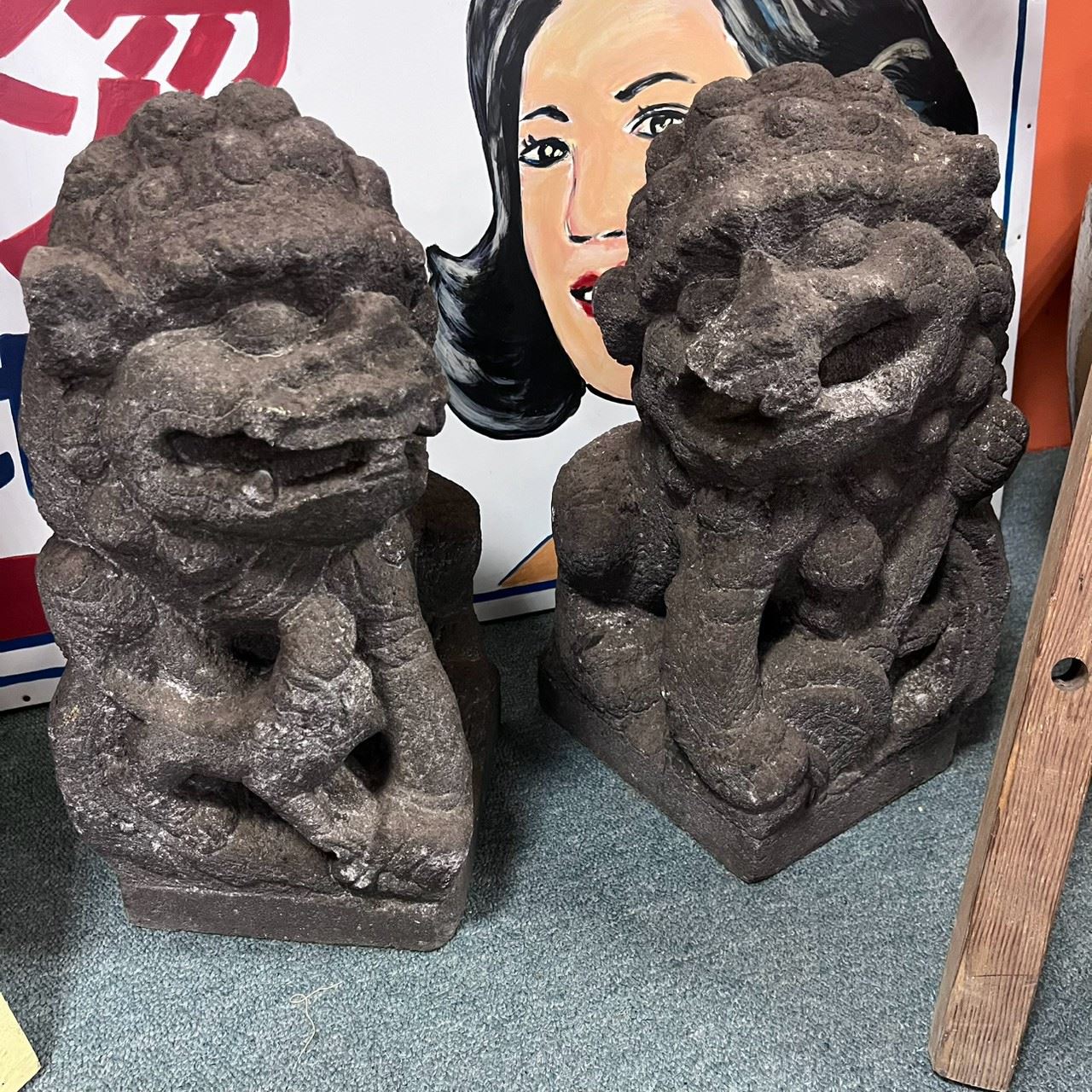
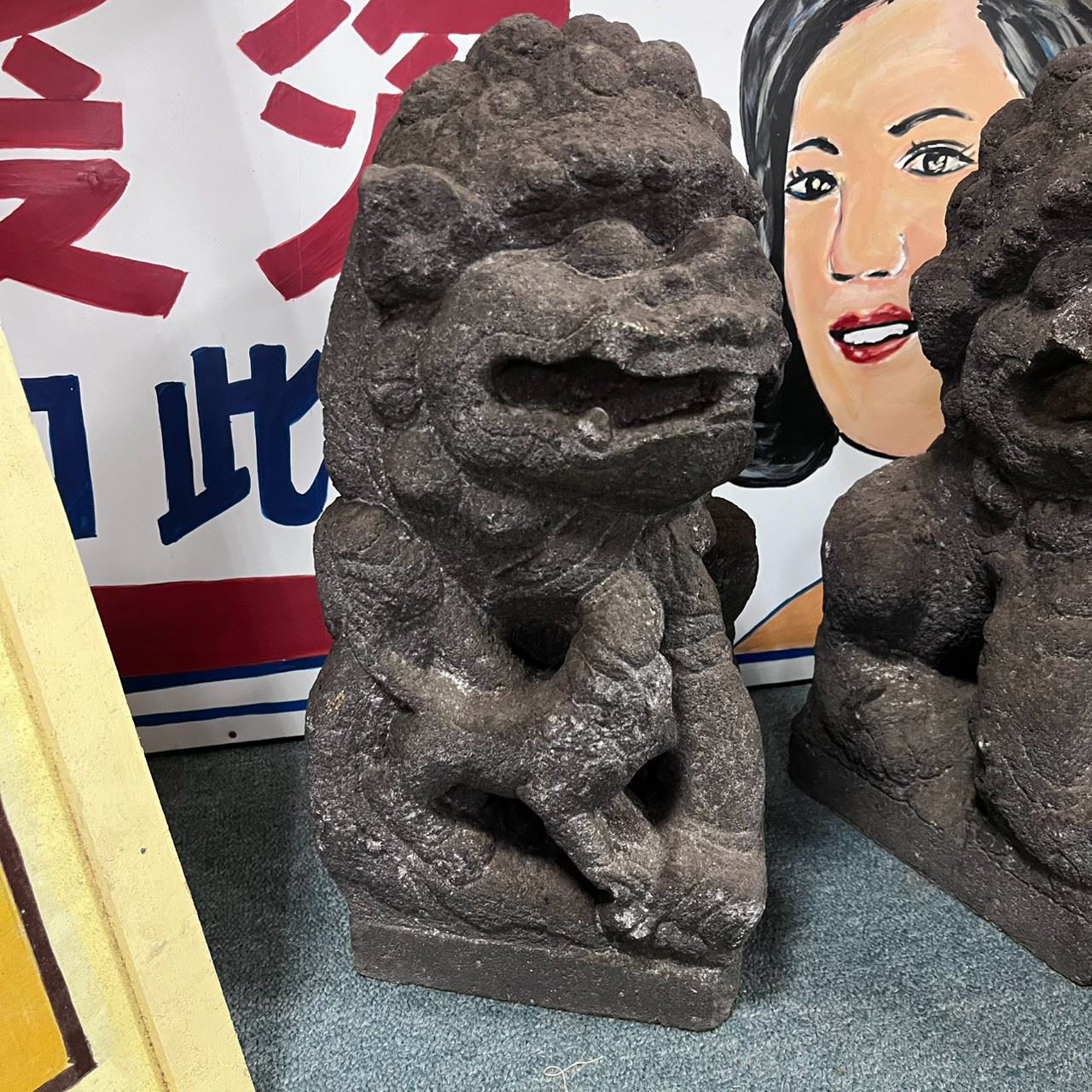
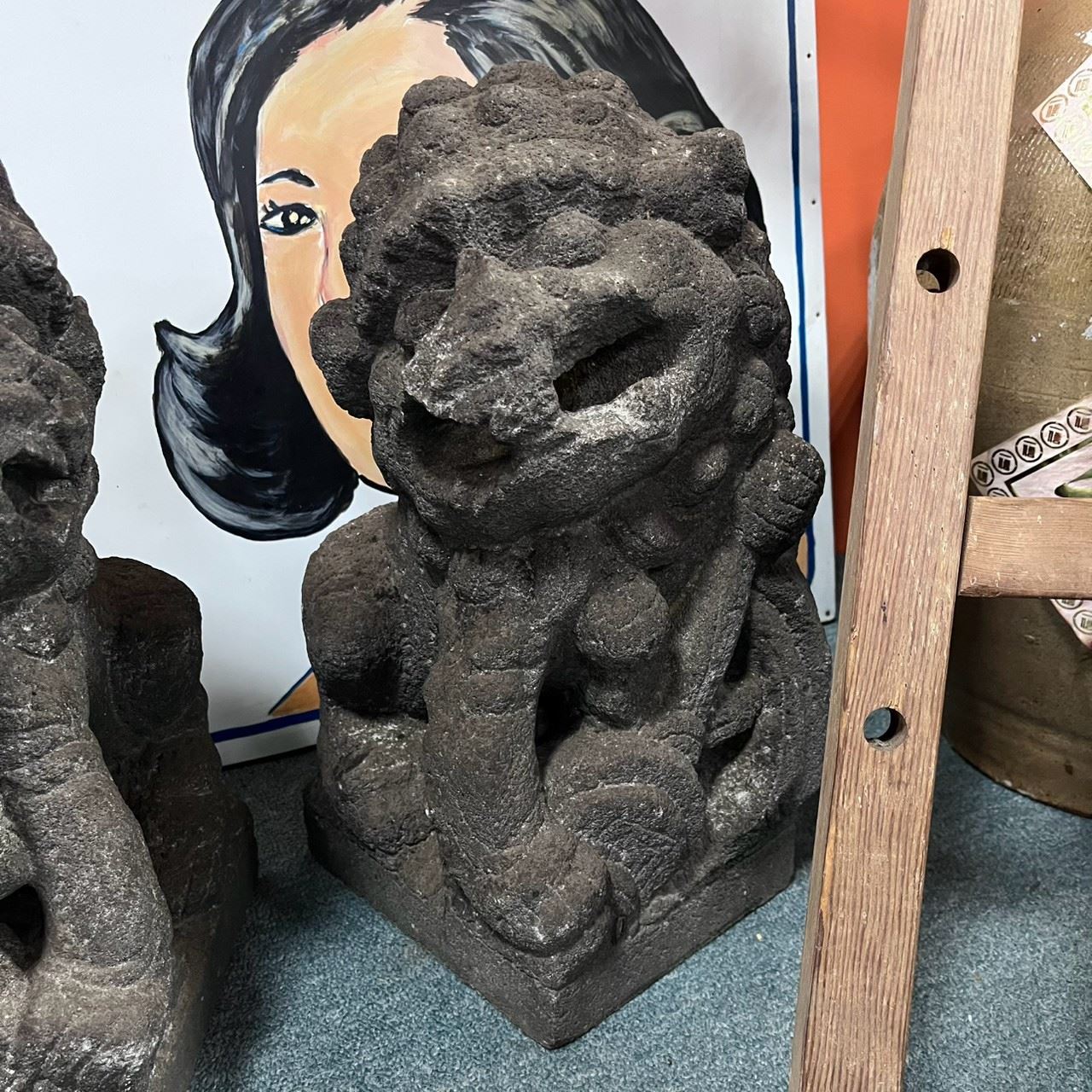
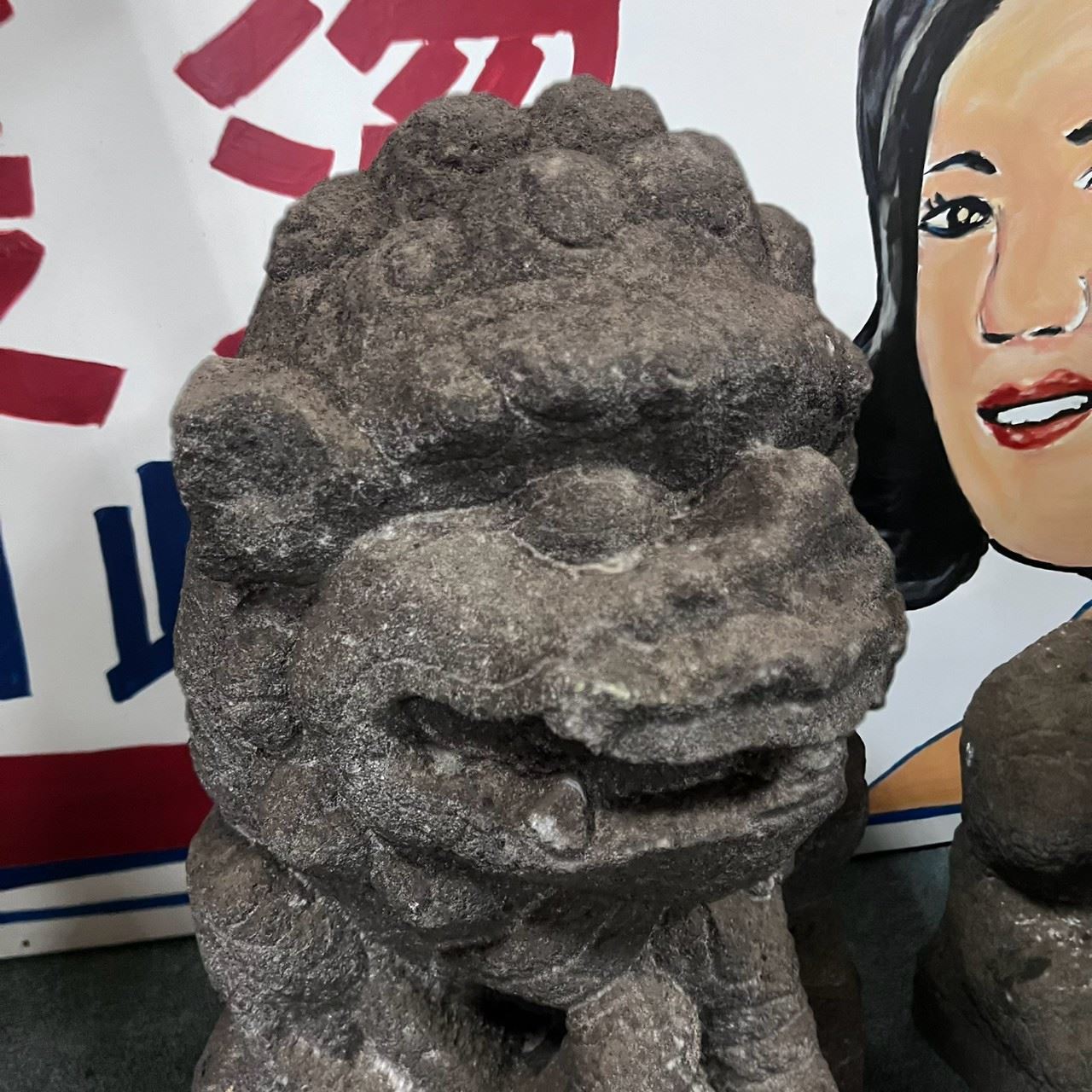
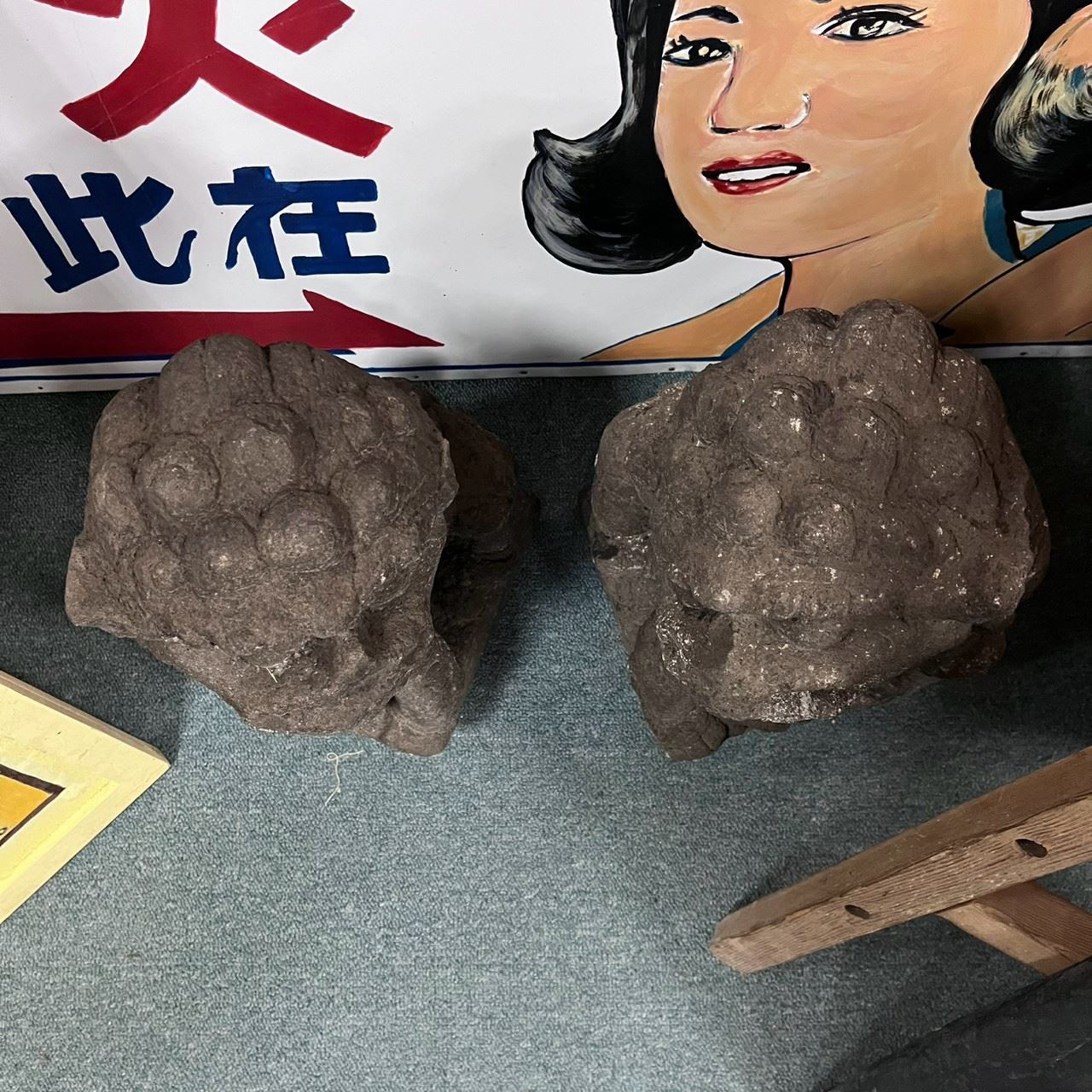
The image shows a matching pair of traditional Chinese guardian lions (commonly referred to as Foo Dogs or 石獅子 in Chinese).
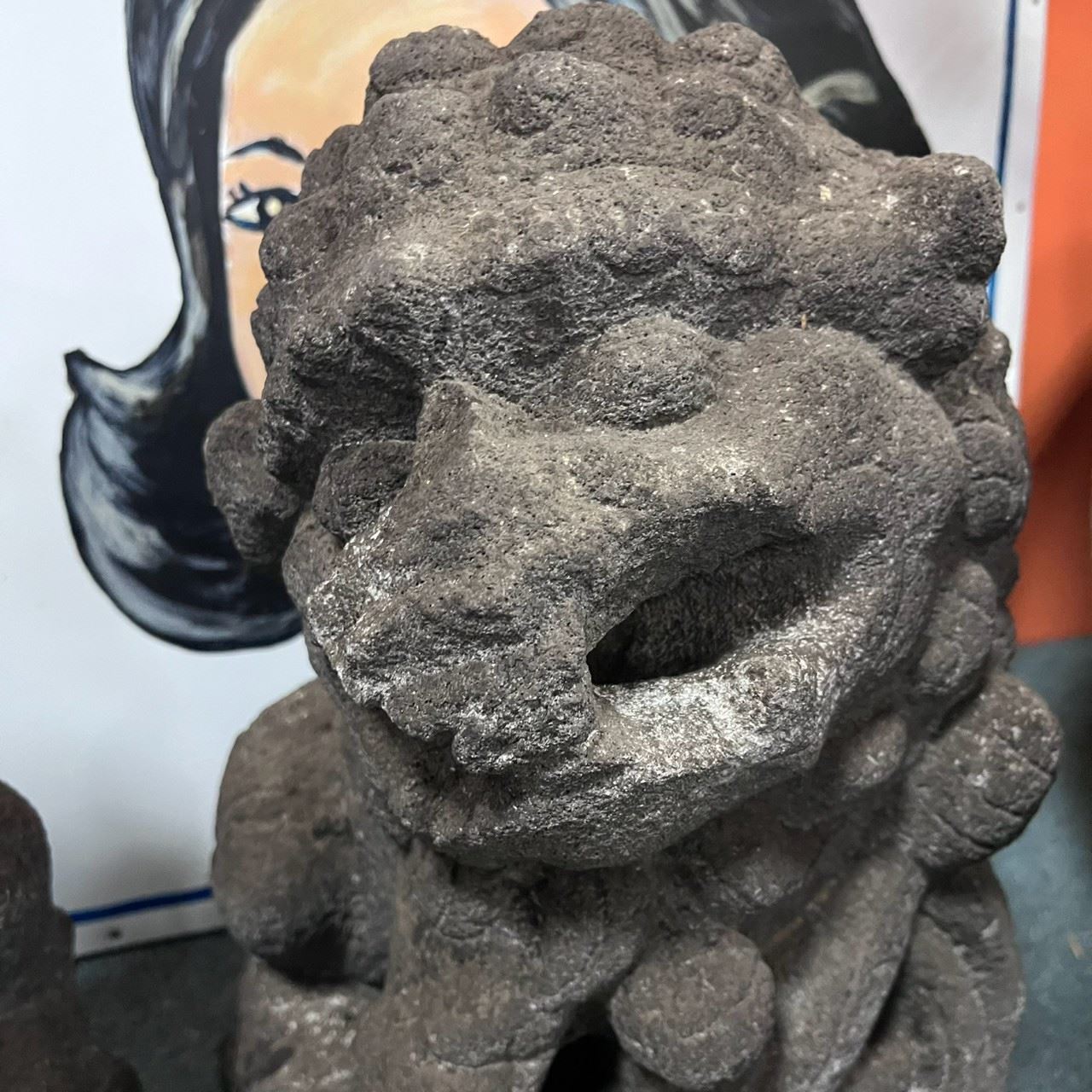
They are hand-carved from a dark, heavily textured volcanic stone or coarse basalt/granite (often referred to locally in Taiwan's antiquities trade as Qingdou stone 青斗石 or similar local fieldstone). The surface shows significant atmospheric weathering, rounding of the sharp carved edges, and deep pitting consistent with long-term placement in an outdoor courtyard or temple entrance.
In accordance with traditional Feng Shui placement, the statue on the left is the female (open mouth, often depicted with a cub under her left paw), and the statue on the right is the male (holding a decorative ribbon or silk xiu qiu embroidered ball under the paw). They are seated on integrated square rock pedestals (案頭獅 )
These display the classic folk-art style characteristic of southern Chinese regional carving (Fujian/Guangdong tradition) which heavily influenced Taiwanese Qing Dynasty aesthetics. They possess the stylised, short-snouted, wide-grinning expressions rather than the rigid imperial look.
Based on the wear, stylistic execution, and tool marks, they most likely date from the late Qing Dynasty – around 1870s – 1890s.
一對傳統的中國守護石獅,也常稱為「石獅子」或英文俗稱的 Foo Dogs。
石獅以深色、質地粗獷的火山岩或粗粒玄武岩/花崗岩手工雕刻而成 (在台灣古物交易中常稱為「青斗石」,也可能是當地的原石)。表面可見明顯的風化痕跡,雕刻邊角經歲月磨圓,並有深層風蝕孔洞,呈現長期置於戶外庭院或廟宇入口的樣貌。
依照傳統風水擺設,左側為母獅 (張口狀,常見左腳邊帶著幼獅);右側為公獅 (腳踩繡球)。兩尊石獅皆坐在方形石座上 (案頭獅)。
這對石獅展現中國南方民間雕刻藝術的特色 (閩粵傳統),深刻影響了台灣清代美學。牠們造型鮮明,口鼻部較短、咧嘴露出笑意,與較為莊嚴刻板的宮廷式石獅大不相同。
依其磨損狀況、雕刻風格與表面鑿痕推測,年代約為清代晚期,約1870至1890年代。